
Are you prepared to fully utilize the potential of artificial intelligence for your business? Amazon Web Services (AWS) AI provides a comprehensive set of technologies that may transform your business. In this detailed guide, you will discover the origins, capabilities, and inner workings of AWS AI. You will also learn who may profit from these services, how to apply them, and how much they cost. We’ll look at the benefits and cons of AWS AI, compare it to competitors, and help you decide whether it’s the best option for your business. By the conclusion of this essay, you’ll understand how AWS AI can improve your business processes and promote innovation.
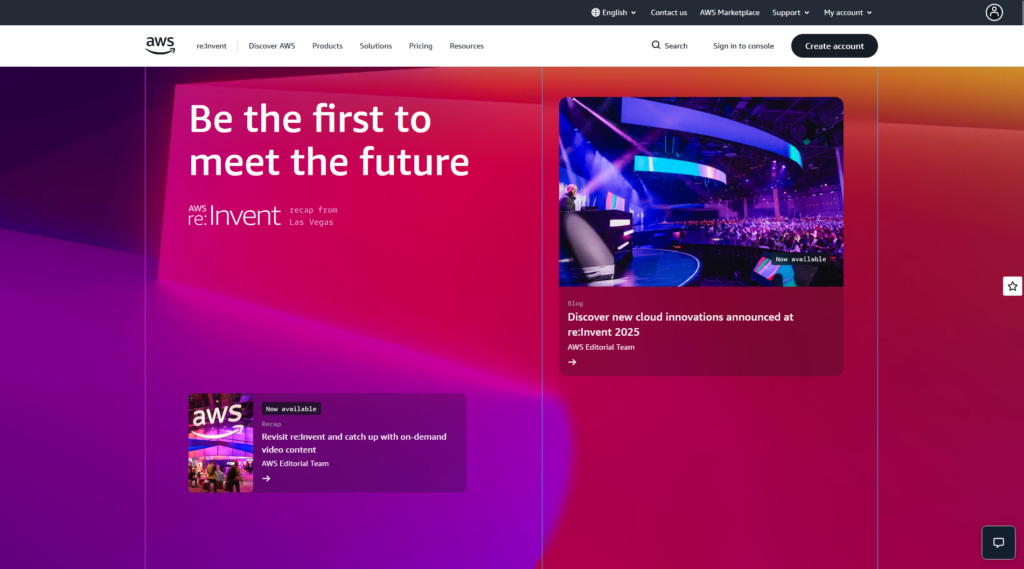
Introducing Amazon Web Services AI, the future of cloud computing.
Amazon Web Services (AWS) AI is changing the face of cloud computing by providing a range of sophisticated tools and services that use the power of artificial intelligence and machine learning. This cutting-edge platform allows enterprises and developers to effortlessly integrate powerful AI capabilities into their apps and workflows.
Core of Amazon Web Services AI
At its core, AWS AI is a comprehensive suite of services built to meet a variety of AI and machine learning requirements. The platform supports a wide range of AI applications, including natural language processing, computer vision, predictive analytics, and customized recommendations. These services are based on Amazon’s powerful cloud architecture, which guarantees scalability, dependability, and excellent performance.
Democratizing AI for All
One of the most impressive features of Amazon Web Services AI is its accessibility. Whether you’re an experienced data scientist or a new developer, AWS AI offers tools and resources that are targeted to your skill level. Pre-built AI services enable easy integration, while more complicated choices appeal to those that want to create and train their own models.
Driving innovation across industries
AWS AI is more than simply a technological marvel; it is also a driving force behind innovation in a variety of industries. From healthcare and banking to retail and entertainment, enterprises are using AI services to:
- Enhance customer experiences with individualized interactions.
- Optimize operations via predictive maintenance and forecasting.
- Increase research and development in areas such as medication discoveries and climate science.
- Develop immersive and engaging content for gaming and media.
As we approach an AI-driven future, Amazon Web Services AI emerges as a formidable ally, allowing organizations to unleash new opportunities and remain ahead in an increasingly competitive digital world.
Who created Amazon Web Services AI?
Amazon Web Services (AWS), an Amazon company, is the driving force behind the development and implementation of AWS AI services. This creative arm of the IT behemoth has been at the forefront of cloud computing and artificial intelligence since its creation in 2006.
The visionaries behind Amazon Web Services AI
AWS AI was created via the joint efforts of multiple great minds across Amazon’s vast ecosystem. While no single person can be acknowledged as the primary creator, numerous prominent players have helped shape AWS AI into the strong array of services that it is today.
Andy Jassy, who previously served as CEO of Amazon Web Services, played a key role in pushing the company’s artificial intelligence ambitions. Under his tenure, AWS dramatically extended its AI offerings, including machine learning capabilities throughout its cloud services.
Continuous Innovation and Development.
AWS AI is not a static product, but rather an ever-changing platform. The company’s dedication to innovation is demonstrated by its ongoing release of new AI services and enhancements to current ones. This continual progress is powered by a team of world-class data scientists, engineers, and researchers that work relentlessly to push the limits of what is possible in artificial intelligence.
These teams were able to produce strong and accessible AI solutions by harnessing Amazon’s massive volumes of data and computing power. AWS AI offers a wide variety of capabilities, from natural language processing to computer vision, to meet the unique demands of businesses across sectors.
Who Can Benefit From Amazon Web Services AI?
Amazon Web Services (AWS) AI provides a diverse set of strong tools and services that may help a variety of sectors and organizations. From startups to enterprises, AWS AI offers solutions that may boost productivity, improve operations, and drive innovation.
Businesses of All Sizes
Small companies and startups may compete with larger enterprises by using AWS AI to gain access to innovative technology without making major upfront expenditures. These technologies may assist automate operations, analyze data, and improve customer experiences, helping smaller businesses to outperform their larger competitors.
Large companies may use AWS AI to expand operations, streamline processes, and obtain important insights from massive volumes of data. The flexibility and scalability of AWS AI services enable large enterprises to integrate AI solutions across various departments and regions.
Developers and Data Scientists
AWS AI offers a powerful platform for developers and data scientists to create, train, and deploy machine learning models. With access to pre-trained AI services and configurable tools, these experts may develop unique apps and solutions that push the limits of what is possible in their particular professions.
Industries with Specific AI Needs.
AWS AI may be used by healthcare companies to analyze medical images, find new drugs, and create tailored treatment regimens. Financial institutions can use these services for fraud detection, risk assessment, and algorithmic trading. Retailers may improve their customer experience by using tailored suggestions and inventory management.
Amazon Web Services has established a platform that can assist practically any enterprise trying to leverage the potential of artificial intelligence to promote development and innovation.
How Does Amazon Web Services’ AI Work?
Amazon Web Services (AWS) AI works with a sophisticated ecosystem of machine learning models, APIs, and cloud-based infrastructure. This potent combination enables organizations and developers to leverage cutting-edge artificial intelligence capabilities without requiring considerable in-house experience or resources.
Core Components
AWS AI is built around a few core services that interact together:
- Amazon SageMaker: This fully managed platform allows data scientists and developers to swiftly create, train, and deploy machine learning models.
- Pre-trained AI services include Amazon Rekognition for image and video analysis, Amazon Comprehend for natural language processing, and Amazon Forecast for time series forecasting.
- ML Services: Tools that help with the full machine learning process, from data preparation to model deployment and monitoring.
AWS AI Workflow
The normal method for utilizing Amazon Web Services AI follows the stages below:
- Data Ingestion: Users upload data to AWS storage services such as S3.
- Data Preparation: AWS technologies can assist clean and preprocess data for machine learning.
- Model Development: SageMaker allows developers to utilize pre-built models or design their own.
- Models are trained using AWS’s scalable infrastructure, which includes automated hyperparameter adjustment.
- Deployment: Trained models are easily deployable to production settings inside the AWS ecosystem.
- Monitoring and Optimization: AWS offers tools for monitoring model performance and retraining as needed.
AWS AI allows users to flexibly scale their AI workloads, guaranteeing optimum resource use and cost-effectiveness. This holistic strategy makes sophisticated AI capabilities available to enterprises of all sizes, accelerating innovation across sectors.
Pricing and Plans of Amazon Web Services AI
Amazon Web Services has a variety of price choices for its AI services, catering to enterprises of different sizes and budgets. Understanding these strategies is critical for firms trying to properly use AWS AI.
Pay-as-you-go Model
The most adaptable alternative is AWS’ pay-as-you-go pricing. This concept lets customers to pay for the resources they use, with no upfront expenditures or long-term obligations. It’s great for enterprises that have changing AI demands or are just getting started with AWS’s AI capabilities.
Reserved instances.
AWS provides Reserved Instances to enterprises with predictable, steady-state AI workloads. Users who commit to a one or three-year contract can save significantly compared to on-demand pricing. This approach is particularly cost-effective for firms that operate AI applications on a continual basis.
Free Tier
AWS also offers a Free Tier for several of its AI services, allowing customers to experiment and learn without incurring any charges. This tier usually gives a certain amount of free use each month, making it a good starting point for developers and small enterprises.
Custom Pricing
Amazon Web Services provides tailored pricing plans to enterprise-level clients with specific AI requirements. These personalized solutions can help reduce costs for large-scale AI applications.
Understanding the various pricing methods is critical to maximize the value of AWS AI services. By carefully examining your organization’s demands and use patterns, you may find the most cost-effective package that fits your AI strategy and budget.
Step-by-Step Guide for Using Amazon Web Services AI
Set up your AWS account.
To use the potential of Amazon Web Services AI, you must first register an AWS account. Visit the AWS website and select “Create an AWS Account.” Follow the steps to provide your personal and billing information. After you’ve created your account, you’ll have access to the AWS Management Console, which serves as the center for all AWS services.
Choose Your AI Service.
Amazon Web Services provides a variety of AI tools and services. Familiarize yourself with Amazon SageMaker for machine learning, Amazon Rekognition for image and video analysis, and Amazon Lex for chatbots and conversational interfaces. Choose the service that best meets your project’s goals and technical needs.
Configure your environment.
After you’ve chosen your AI service, you’ll need to configure your development environment. This usually entails creating an IAM (Identity and Access Management) user, configuring the AWS CLI (Command Line Interface), and installing any required SDKs (Software Development Kits) for your choice programming language.
Develop and train your AI model.
Once your environment is set, you may begin constructing your AI model. If you’re using Amazon SageMaker, you’ll set up a notebook instance, prepare your training data, and select an algorithm. To train and fine-tune your model for maximum performance, go to the documentation for the service you have chosen.
Deploy and Monitor your AI solution.
After your model has been trained and tested, it is time to deploy it. AWS offers a variety of deployment choices, ranging from serverless methods to containerized solutions. After deployment, use AWS CloudWatch to monitor the performance of your AI application and make changes as needed to ensure that it continues to fulfill your business goals.
Advantages of Using Amazon Web Services AI
Scalability and Flexibility
Amazon Web Services (AWS) AI provides exceptional scalability, enabling organizations to easily adapt their AI capabilities as their needs change. Whether you’re a startup or an enterprise, AWS AI can help you develop without requiring major infrastructure expenditures. This flexibility allows businesses to experiment with AI applications at a low cost, scaling up just as needed.
A Comprehensive Suite of AI Tools
AWS offers a broad ecosystem of AI services, ranging from machine learning to natural language processing. This complete toolset allows developers and data scientists to create advanced AI systems without starting from scratch. AWS AI shortens development time and lowers technical hurdles to AI adoption by providing pre-trained models and configurable algorithms.
Integration with existing AWS services.
For organizations that currently use Amazon Web Services, incorporating AI is simple. AWS AI services are readily integrated with other AWS services, such as storage, compute, and analytics tools. This connection simplifies workflows, improves data management, and provides a uniform platform for all of your cloud and AI requirements.
Cost-Effectiveness
Companies that use AWS AI may drastically cut the expenses involved with creating and maintaining AI technology. The pay-as-you-go approach guarantees that you only pay for the resources you use, making powerful AI capabilities available to organizations of any size. This cost-effectiveness enables greater experimentation and innovation without the constraint of large initial investments.
Continuous Innovation and Updates
AWS constantly upgrades its AI services with the most recent breakthroughs in the industry. This dedication to innovation guarantees that consumers always have access to cutting-edge AI technology, eliminating the need for ongoing in-house research. AWS AI advances alongside AI, keeping your organization at the cutting edge of technical capabilities.
Potential drawbacks of Amazon Web Services AI
While Amazon Web Services (AWS) AI has impressive capabilities, it’s crucial to examine certain possible downsides before completely committing to this platform.
Learning Curve and Complexity
AWS AI offers a wide range of tools and services, which might be intimidating to newbies. The sheer amount of options and settings available may necessitate substantial time and effort to master. This complexity might result in a high learning curve, slowing down implementation and raising the danger of misconfigurations.
Cost Considerations:
Although AWS AI provides various pricing structures, prices can quickly rise, particularly for resource-intensive AI applications. As your consumption increases, so will your expenditures. To minimize surprise expenses, continuously monitor and manage your resource utilization. Furthermore, certain advanced AI functions may be expensive, putting a burden on smaller enterprises or startups’ resources.
Vendor Lock-in Concerns
Adopting AWS AI extensively might result in reliance on their unique tools and infrastructure. This vendor lock-in might make it difficult to transition to other platforms or interface with non-AWS services in the future. Organizations should carefully analyze their long-term AI strategy and weigh the risks of being overly reliant on a single source.
Data Privacy and Compliance Challenges
While Amazon Web Services maintains strong security procedures, giving sensitive data to a third-party cloud service poses privacy issues. Depending on your sector and region, compliance with data protection standards like as GDPR or HIPAA may necessitate additional work and documentation when utilizing AWS AI services. It is critical to properly analyze AWS’s compliance certifications and apply appropriate data governance measures.
By comparing the possible negatives against the benefits, you can make an educated choice about whether Amazon Web Services AI meets your organization’s needs and objectives.
Amazon Web Services AI FAQs: Unlocking the Secrets.
What is the Amazon Web Services AI?
Amazon Web Services (AWS) AI is a complete set of artificial intelligence tools and services intended to help businesses and developers. This powerful platform uses machine learning, deep learning, and natural language processing to tackle challenging issues and promote innovation across several sectors.
Who can utilize AWS AI?
AWS AI serves a wide spectrum of users, from startups to enterprise-level companies. Whether you’re a data scientist, software engineer, or business analyst, these tools may be adjusted to your individual requirements. The platform’s scalability means that businesses of all sizes may use AI technology to improve operations and develop cutting-edge solutions.
How does AWS AI work?
AWS AI’s primary technology is cloud computing infrastructure, which provides on-demand access to powerful AI and machine learning algorithms. Users can select from pre-built models or construct new solutions utilizing AWS’ comprehensive toolbox. The platform connects easily with other AWS services, making it possible to analyze data efficiently, train models, and deploy AI-powered applications.
What are the price options?
AWS AI provides customizable pricing options to suit a variety of budgets and usage patterns. Users can choose between pay-as-you-go subscriptions, reserved instances for long-term commitments, or spot instances for low-cost, short-term processing capacity. This flexible price structure allows organizations to expand their AI ambitions without breaking the bank.
Conclusion
As you explore the tremendous possibilities of Amazon Web Services AI, keep in mind that this powerful set of tools is intended to help enterprises of all sizes. Using AWS AI’s cutting-edge capabilities, you can optimize processes, gather important insights, and drive innovation inside your organisation. While competitors exist, AWS AI’s seamless integration with other Amazon services and pay-as-you-go pricing model make it an appealing option for many. Before implementing any technology, thoroughly assess your individual requirements and available resources. With the right strategy and execution, AWS AI may be a game changer in your quest for digital transformation and a competitive edge in today’s data-driven world.
READ MORE
Microsoft Azure AI: The Best professional AI Package for you
Mistral AI : The Magic of the AI in your hand